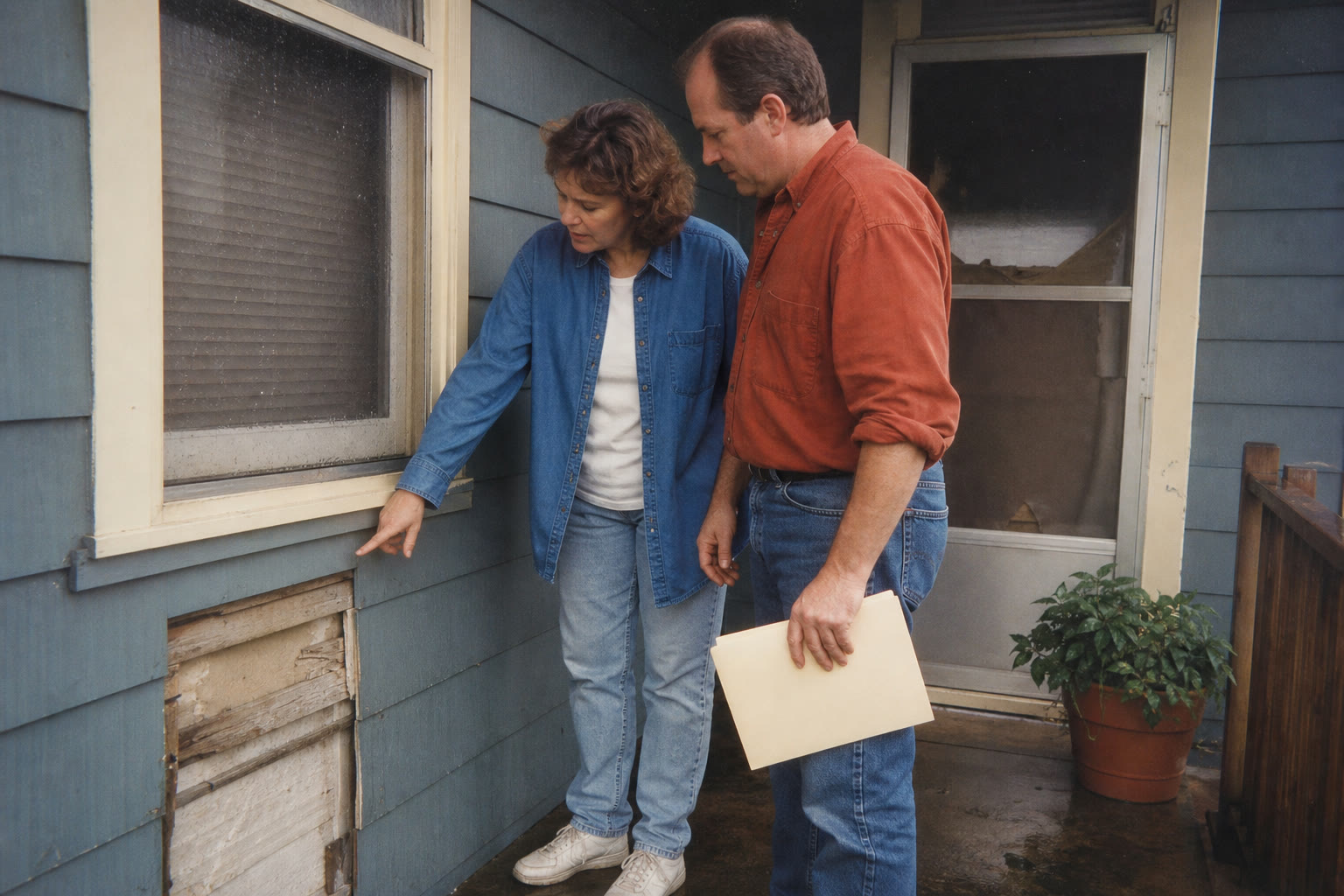
After a fire, flood, hurricane, or other disaster, every person wants a number and every room needs work. Start one envelope for the loss. Put copies in it. Keep originals somewhere dry.
First: be safe, then take pictures
Do not enter a building that officials say is unsafe. When it is safe, take wide photos of each room and close photos of damage. Photograph appliance model labels if they can be reached safely. Do not throw away a damaged item before the insurer or agency says it is okay, unless it is a health hazard. If it must go, photograph it first.
Call the insurer
Report the loss to the home, renters, auto, or flood insurer that may cover it. Ask for the claim number and the rules for emergency repairs. FEMA help is not a replacement for insurance, and federal assistance generally cannot pay twice for the same loss.
Check the federal declaration
Individual Assistance is tied to a federal disaster declaration and the approved area. Use DisasterAssistance.gov to check the address and apply. You can also use the FEMA app or call the FEMA Helpline at 800-621-3362.
Keep these five things together
- Insurance claim number and adjuster contact.
- FEMA application and registration number.
- Photos and a simple room-by-room damage list.
- Receipts for lodging, repairs, cleanup, and replaced essentials.
- Every decision letter and the envelope it came in.
The inspection is not an instant approval
FEMA may arrange an inspection. Verify the inspector’s identity. A FEMA inspector should have official photo identification and your application number. The inspector does not charge a fee and does not decide the final amount at the door.
Never give money, bank passwords, or a full Social Security number to a person who appears at the house.
Read a “not approved” letter closely
A letter can mean FEMA needs an insurance decision, proof of occupancy or ownership, identity proof, or more details. It may not be the last word. The letter tells you how to send information or appeal. Deadlines matter.
Keep repair estimates plain
Get a written scope, price, contractor name, license information where required, and payment schedule. Be careful with a person who wants the full amount up front or wants you to sign over an insurance check.
Disaster aid, insurance, charitable help, and disaster loans are different things. Ask what you are signing and whether money must be repaid.
Where we checked
Go straight to the source
- DisasterAssistance.govOfficial federal portal to check, apply, and track disaster assistance.
- FEMA Individual AssistanceProgram overview and application routes.
- FEMA: After you applyInspection, documentation, decision, and appeal steps.
We link to the official office when one exists. A link is not an endorsement, and we do not control outside sites.